What Size C&I Energy Storage System Does Your Business Need?
Release time: 2026-09-21
Table of Contents
Choosing the right energy storage capacity is not simply a matter of selecting the largest battery available. For a factory, commercial building, EV charging site, farm, or other business facility, the system needs to match the site’s power demand, energy consumption pattern, backup requirements, and available solar capacity.
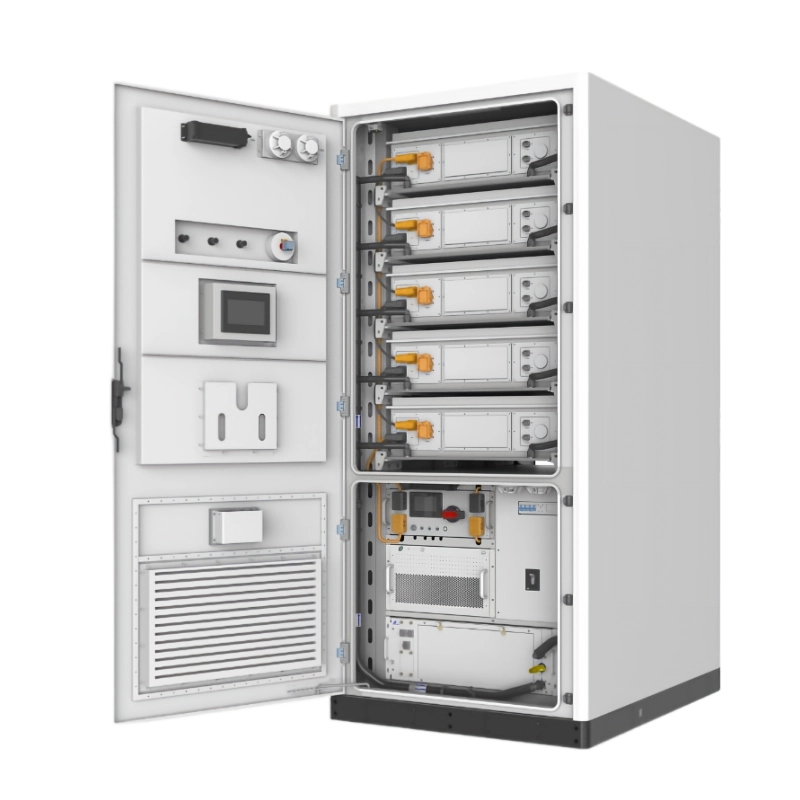
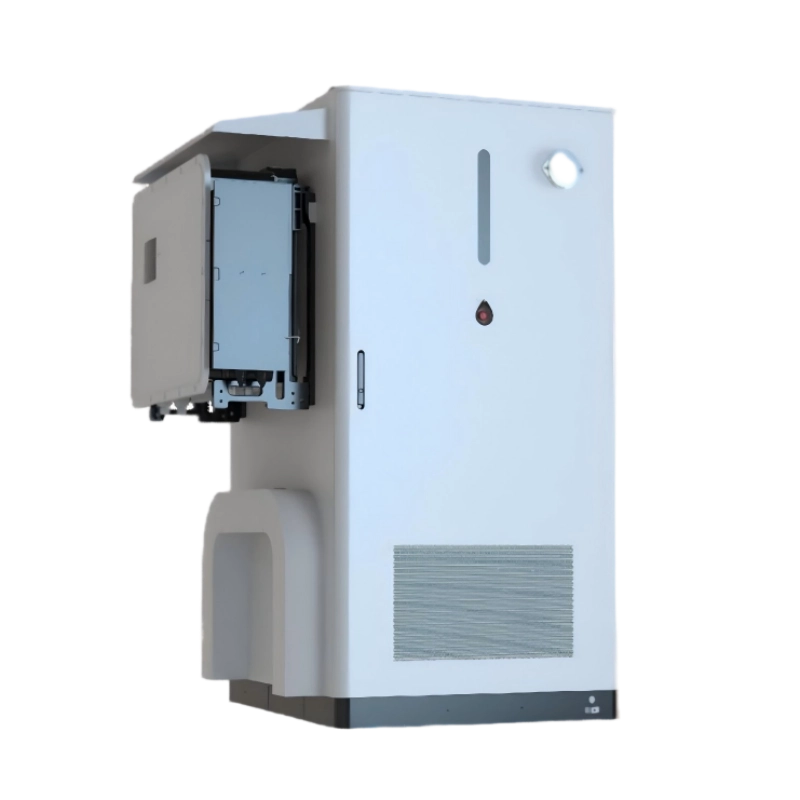
For businesses looking for a practical c&i energy storage system, Enjoy Solar Co., Ltd. offers several configurations covering system power from 30kW to 250kW and battery capacity from 60kWh to 500kWh. This range makes it easier to select a system according to the actual load rather than paying for storage capacity that may not be fully used.
C&I Energy Storage Products Available for Different Business Loads
The product range includes several standard configurations, from compact 30kW systems to larger 250kW systems. Some models are also available with different battery capacities, allowing businesses to balance power output and energy storage according to their operating needs.
| System Power | Battery Capacity | Typical Configuration |
| 30kW | 60kWh | 30kW hybrid inverter + 61.44kWh LiFePO4 battery |
| 50kW | 100kWh | 50kW hybrid inverter + 112.53kWh LiFePO4 battery |
| 100kW | 208kWh | 100kW hybrid inverter + 208.99kWh battery |
| 125kW | 241kWh | 125kW inverter + 241kWh battery |
| 150kW | 289kWh | 150kW inverter + 289.38kWh battery |
| 250kW | 500kWh | 250kW hybrid inverter + 500kWh battery |
These configurations are designed for commercial and industrial applications and can be used in areas such as factories, EV charging facilities, farms, commercial sites, and BESS stations. The systems also support intelligent energy management, peak shaving, energy cost reduction, and backup power during outages.
How to Match System Size With Your Business
The most suitable commercial & industrial energy storage system depends on both power demand and how long the battery needs to supply energy.
For example, a facility with relatively moderate electrical demand may not need a 250kW system. A 30kW or 50kW configuration can be more practical when the main purpose is solar self-consumption, load shifting, or short-term backup.
For sites with higher and more variable loads, the 100kW, 125kW, and 150kW configurations provide more output power and larger battery capacity. These systems are suitable for businesses that need greater energy flexibility throughout the day.
For larger commercial or industrial facilities, the 250kW/500kWh system provides a significantly higher storage capacity and is designed for applications where both power output and stored energy are important.
30kW and 50kW Systems for Smaller C&I Loads
The 30kW and 50kW systems are a useful starting point for businesses that do not require a large centralized storage system.
The 30kW model uses a 30kW hybrid inverter and a 61.44kWh LiFePO4 battery configuration. The 50kW model uses a 50kW hybrid inverter with a battery capacity of 112.53kWh.
Both configurations can integrate solar generation and intelligent energy management. The system can prioritize solar power during the daytime and switch to battery power when solar generation is unavailable or during a grid outage.
These models can be considered for EV charging sites, farms, commercial buildings, and other facilities where energy demand is moderate but energy storage still needs to be available.
100kW, 125kW, and 150kW Systems for Medium-to-Larger Loads
For facilities with higher electricity consumption, the 100kW, 125kW, and 150kW systems provide more flexibility.
The 100kW configuration comes with a 208.99kWh battery, while the 125kW and 150kW configurations provide approximately 241kWh and 289kWh of battery capacity respectively.
The systems can be configured with different inverter brands, including Deye, Solis, and Growatt, while solar panels can be supplied from brands such as EnjoySolar, Longi, JA, Jinko, and Trina, depending on the project requirements.
For businesses considering a 100kw c&i energy storage system, the 100kW/208kWh configuration is one of the more straightforward options in this product range. It combines a 100kW inverter with a battery capacity of 208.99kWh and can be customized according to the site’s energy consumption profile.
The 125kW and 150kW models can be considered when the facility has a higher peak load or requires additional storage capacity.
When Is a 250kW/500kWh System More Suitable?
The 250kW/500kWh system is designed for larger C&I applications where a smaller system may not provide enough power or storage capacity.
Its configuration includes a 250kW hybrid inverter and two 241kWh battery clusters, giving a total battery capacity of approximately 500kWh. The system can also be integrated with a large solar array, with the listed configuration using 420 units of 620W solar panels.
This type of system may be considered for larger factories, EV charging facilities, farms, and BESS applications where the energy load is relatively high and longer battery operation is required.
Instead of choosing this model simply because it has a larger capacity, buyers should first check the facility’s actual load profile and daily energy consumption.
Battery Capacity Matters as Much as Inverter Power
When comparing energy storage products, two numbers should be considered separately: kW and kWh.
- kW indicates the power the system can deliver at a given moment.
- kWh indicates how much energy the battery can store.
For example, a 100kW system with a 208kWh battery is different from a 50kW system with a 100kWh battery. The first provides higher output power and greater overall storage capacity, while the second may be more appropriate for a smaller facility.
This is why choosing an energy storage system only by inverter power can lead to an inaccurate system design.
Air-Cooled and Liquid-Cooled Battery Cabinet Options
In addition to complete C&I solar energy storage systems, the product range also includes integrated outdoor battery cabinet options.
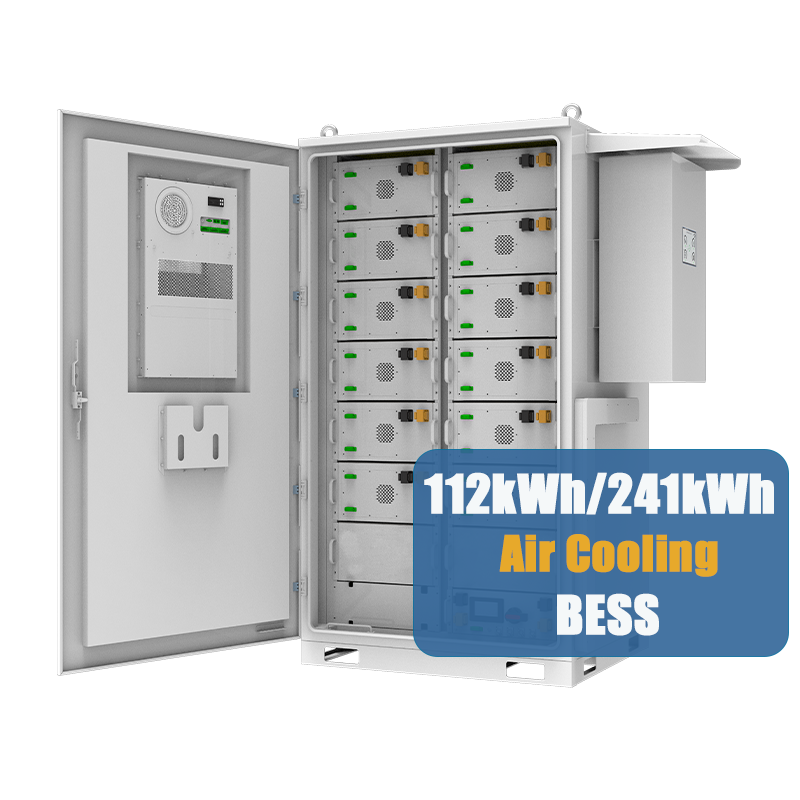
The 112kWh and 241kWh air-cooled LiFePO4 battery outdoor cabinets combine battery cells, BMS, PCS, EMS, air conditioning, and other system components in an integrated cabinet design.
There is also a 125kW/261kWh liquid-cooled outdoor all-in-one cabinet. It integrates batteries, power conversion, energy management, power distribution, controls, and fire safety functions into one system.
These cabinet-based configurations can be considered when an integrated outdoor energy storage solution is preferred instead of assembling individual components separately.
What Should You Check Before Choosing a C&I Energy Storage System?
Before deciding between 30kW, 50kW, 100kW, 150kW, or 250kW, several project details should be reviewed.
1. Peak Load
Check the facility’s maximum power demand rather than relying only on its average electricity consumption. A system that is too small may not provide sufficient support during high-load periods.
2. Daily Energy Consumption
Battery capacity should correspond to how much energy the facility actually needs to store and use. This helps determine whether a 60kWh, 100kWh, 200kWh, or 500kWh-class system is more appropriate.
3. Solar Capacity
If the system will operate with photovoltaic panels, the solar array should be considered together with the inverter and battery capacity. The listed Enjoy Solar configurations can be supplied as integrated solar-plus-storage systems.
4. Backup Requirements
If backup power is one of the main reasons for installing storage, determine which loads need to remain operational during an outage and for how long.
The product pages list standard lithium-ion battery configurations with around two hours of backup power, while the actual configuration can be customized according to the site’s energy consumption profile.
5. Future Expansion
A business may have higher energy demand in the future because of additional equipment, production expansion, or EV charging infrastructure. A modular and scalable system can make future capacity planning easier.
Why Product Configuration Should Be Based on the Actual Load Profile
There is no single storage size that works for every commercial or industrial facility.
A farm with a moderate daytime load may have very different requirements from a factory operating multiple production lines. An EV charging site can also experience short periods of high power demand that need to be considered separately from average daily consumption.
For this reason, the available 30kW, 50kW, 100kW, 125kW, 150kW, and 250kW configurations provide different starting points for project design. Battery capacity, solar capacity, inverter selection, and operating strategy can then be adjusted around the actual application.
FAQ
1. What size C&I energy storage system is suitable for a small business?
A 30kW or 50kW system may be suitable for smaller commercial facilities or sites with moderate electricity demand. The final selection should be based on the site’s peak load and energy consumption.
2. Is a 100kW system enough for a factory?
It depends on the factory’s electrical load. The 100kW/208kWh configuration can be considered for facilities whose power demand and storage requirements fit within this range. Larger loads may require the 125kW, 150kW, or 250kW configurations.
3. What is the difference between 100kW and 208kWh?
100kW refers to the system’s power output, while 208kWh refers to the battery’s stored energy capacity. Both figures are important when evaluating an energy storage system.
4. Can the battery capacity be customized?
Yes. The product information states that the standard battery configuration can be customized according to the actual energy consumption profile and project requirements.
5. Where can these C&I systems be used?
The listed applications include factories, EV charging facilities, farms, commercial sites, and BESS stations.
Choose the Size That Fits the Project
The right C&I storage system is not necessarily the largest one. The better choice is the configuration that matches the facility’s power demand, battery requirements, solar generation, backup expectations, and future expansion plans.
With configurations ranging from 30kW/60kWh to 250kW/500kWh, as well as integrated air-cooled and liquid-cooled battery cabinets, Enjoy Solar Co., Ltd. provides several options for different commercial and industrial applications. Its C&I energy storage systems can also be customized around the specific energy profile of a project, making the product range suitable for businesses with different load characteristics.