How Does a 480V Energy Storage System Improve C&I Solar Utilization?
Release time: 2026-07-31
Table of Contents
Adding more solar panels does not automatically mean a commercial or industrial facility will use more solar energy onsite. The real challenge often appears when solar generation and electricity demand occur at different times: PV output may be strongest around midday, while a factory or commercial building may reach its highest demand later in the afternoon.
That timing mismatch is where solar-plus-storage becomes valuable. In 2026, C&I storage discussions are increasingly focused on solar self-consumption, intelligent energy management and the coordination of PV, batteries, loads and tariffs rather than simply installing a larger battery.
Why Do Solar Generation and C&I Loads Fall Out of Sync?
A typical commercial solar system produces most of its electricity during daylight hours.
The facility’s load profile, however, may look very different.
A manufacturing plant may gradually increase production in the morning, maintain a steady load around midday and then experience another demand increase in the afternoon as equipment, HVAC and production processes operate simultaneously.
This creates two common situations:
- Solar production is high when onsite demand is relatively low.
- Electricity demand remains high after solar output begins to decline.
Without battery storage, surplus PV electricity may need to be exported, curtailed or otherwise managed depending on the project’s grid connection and local market rules.
With storage, the energy flow can become:
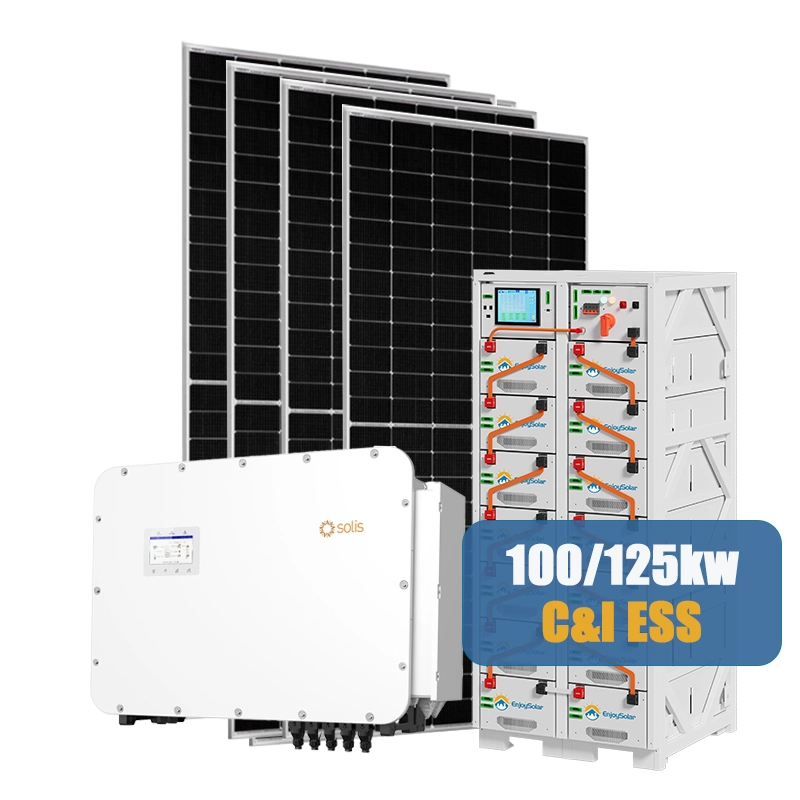
Solar generation → Battery charging → Stored energy → Peak-hour discharge → Onsite consumption
That is one of the central applications of a 480V Solar Battery Storage System in C&I projects.
How Can 480V Storage Increase Solar Self-Consumption?
A battery does more than simply store daytime electricity for nighttime use.
An effective solar-plus-storage system needs to determine when charging and discharging create the most value for the facility.
A typical operating strategy can be divided into three stages.
1. PV generation exceeds site demand
When PV output is higher than the facility’s instantaneous load, surplus solar power can be directed toward the battery.
Instead of being immediately curtailed or exported at a lower value, that energy can become dispatchable electricity for later use.
2. PV generation matches site demand
When solar production and facility demand are relatively balanced, PV power can directly supply the site’s loads.
The battery does not need to cycle unnecessarily, which can help preserve available storage capacity for higher-value periods.
3. Site demand exceeds solar output
When demand rises later in the day or during another high-load period, the battery can discharge according to the EMS strategy.
This can reduce grid dependence during selected periods while improving the match between solar generation and actual facility consumption.
Therefore, the value of a 480V Solar Energy Storage System is not simply that it produces more solar electricity. Instead, it can increase the proportion of existing PV generation that the facility can use at the right time.
Why Is EMS Critical to Solar-Plus-Storage Performance?
The battery itself does not decide when it should charge or discharge.
That system-level coordination is handled by the Energy Management System, or EMS.
For a C&I project, an EMS may consider:
- Real-time PV output
- Facility load
- Battery state of charge
- Grid power
- Peak demand
- Time-of-use tariffs
- Backup reserve requirements
- Battery operating limits
For example, a system programmed only to maximize solar self-consumption could discharge too aggressively during the afternoon and leave insufficient energy available when the facility reaches its actual demand peak.
A more sophisticated strategy can identify high-value periods and preserve sufficient state of charge for them.
This is becoming increasingly important in C&I storage. Current industry guidance emphasizes that the economic value of a BESS depends heavily on when it charges, when it discharges and how it coordinates PV, loads, tariffs and backup requirements.
Which C&I Sites Can Benefit From 480V Solar Storage?
Every commercial facility has a different energy profile, so the value of solar-plus-storage depends on the application.
| Application | Main Challenge | Solar + Storage Role |
|---|---|---|
| Manufacturing | High production loads | Solar utilization and peak management |
| Warehouse | Variable daytime demand | Surplus solar absorption |
| Commercial Building | Predictable weekday loads | Self-consumption and load shifting |
| Industrial Facility | High-power equipment | Peak shaving and backup |
| Solar-Rich Site | High PV output | Capture excess solar generation |
For projects using three-phase commercial or industrial distribution, the 480V architecture also needs to be evaluated alongside the site’s distribution equipment, PCS, PV system and grid interconnection.
Should a Business Choose 100kW, 125kW or 150kW?
When evaluating an ESS, the first question should not simply be:
How much battery capacity do we need?
A better question is:
What does the site’s actual power profile look like?
For a project focused primarily on solar self-consumption, buyers should examine:
- Daily PV generation
- Midday solar surplus
- Afternoon and evening demand
- Usable battery capacity
- Maximum charge and discharge power
For a project focused more heavily on peak shaving, the analysis should include:
- Monthly peak demand
- Peak duration
- Time of peak occurrence
- Target peak reduction in kW
- Local demand-charge structure
This means there is no universally optimal choice between 100kW, 125kW and 150kW.
The right configuration depends on the facility’s load profile and the financial or operational objectives of the project.
Why Is LiFePO4 Well Suited to Solar Energy Storage?
A solar-plus-storage system may cycle repeatedly under different operating conditions, so the battery chemistry needs to support long-term stationary operation.
LiFePO4 has established applications in stationary energy storage and is known for characteristics including good thermal stability and predictable cycling behavior.
For a 480V LiFePO4 Energy Storage System, the overall design should also consider:
- Battery Management System
- State-of-charge management
- Temperature monitoring
- PCS efficiency
- Charge and discharge limits
- EMS control logic
- Operating environment
This is why evaluating an ESS supplier should involve more than comparing battery capacity in kWh.
The system’s control architecture and long-term operating strategy can be just as important as the battery itself.
How Does Enjoy Solar ESS Connect Solar and Storage?
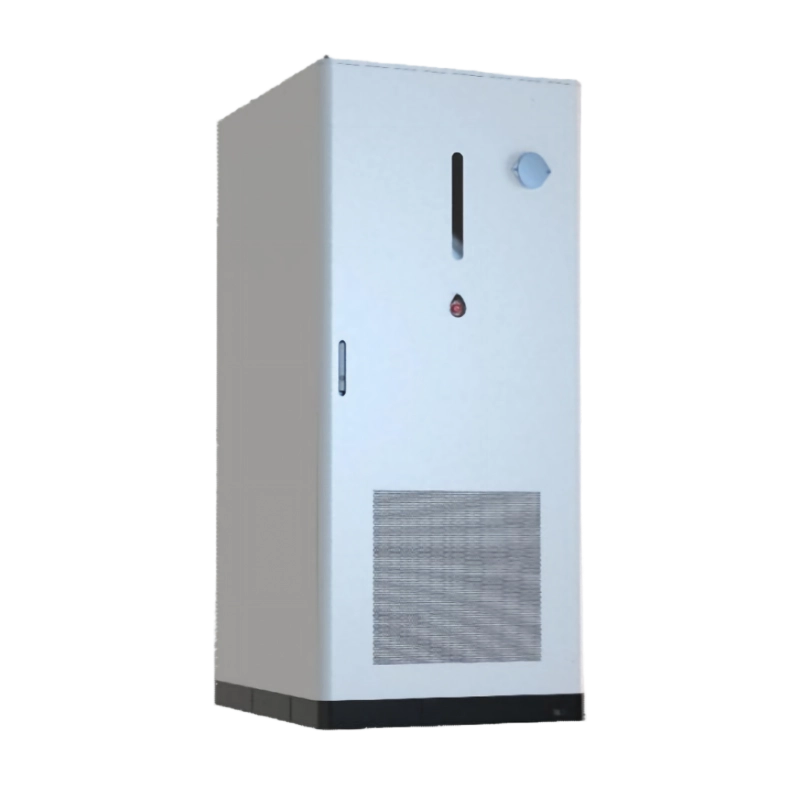
For C&I projects seeking to increase onsite solar utilization while managing commercial or industrial loads, Enjoy Solar ESS offers a 480V Solar Energy Storage System based on LiFePO4 battery technology.
480V Solar Energy Storage System
For EPC contractors, project developers, energy managers and commercial users, the better question is not simply whether a battery should be added. The more useful question is whether storage can solve the timing mismatch between PV generation and site demand while creating additional value during high-demand periods.
Planning a C&I solar-plus-storage project? Contact Enjoy Solar ESS to evaluate a suitable storage configuration based on the site’s load profile, PV capacity and operating objectives.
FAQ
What is solar self-consumption?
Solar self-consumption means using electricity generated by a PV system directly at the site instead of exporting it to the grid. Battery storage can increase the amount of solar energy available for later onsite use.
How does battery storage improve solar utilization?
The battery stores surplus PV electricity when solar generation exceeds site demand and can release that stored energy later when demand increases or solar output declines.
Can a 480V ESS work with commercial solar systems?
It can, provided the system’s electrical architecture is compatible with the site’s distribution system, PV equipment, PCS and grid interconnection requirements.
Does a larger battery always improve solar utilization?
No. Battery capacity should be matched to the site’s load profile, PV generation and operating objectives. Oversizing can add capital cost without delivering proportional value.
What does an EMS do in a solar energy storage system?
An EMS coordinates PV generation, battery charging and discharging, facility loads, grid power and operating constraints. In C&I projects, this control layer is important for maximizing the economic value of stored solar energy.